
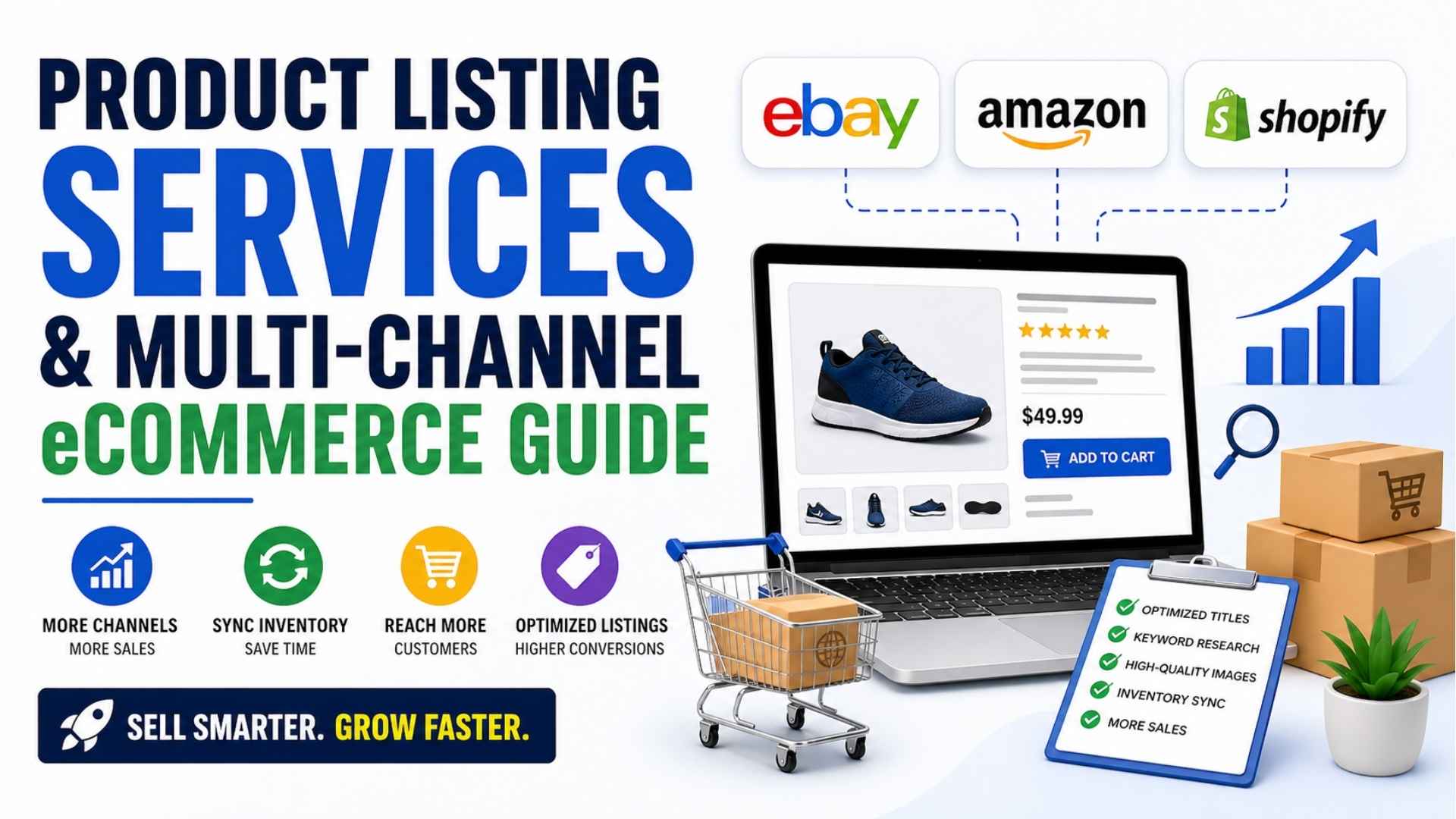
In the rapidly evolving digital landscape, the “build it, and they will come” philosophy no longer applies to online retail. To succeed in today’s hyper-competitive environment, brands must shift from a localized storefront mindset to a global presence. This transition is powered by a robust multi-channel platform strategy.
This comprehensive guide explores how businesses can scale by integrating their operations across the multi-channel marketplace, specifically focusing on the powerhouse trifecta of eBay, Amazon, and Shopify.
Understanding the Multi-Channel Ecosystem
At its core, multi-channel ecommerce is the strategy of selling your products on more than one platform. While it sounds simple, the execution is a complex ballet of data synchronization, brand consistency, and platform-specific optimization.
Why Multi-Channel is Non-Negotiable
The modern consumer journey is fragmented. A shopper might discover a product on a TikTok ad, research it on a multi-channel platform like Amazon for reviews, and finally purchase it on eBay to take advantage of a specific loyalty discount or shipping offer.
If your brand is missing from any of these touchpoints, you aren’t just losing a sale; you are losing market share and valuable data-driven insights into your customers’ behavior gaps that can often be addressed with effective E-commerce product listing services.
The Role of Professional Product Listing Services
Listing a product is more than just uploading a photo and a price tag. It is an exercise in data science and persuasive copywriting. Professional product listing services provide the technical expertise needed to ensure that your products are not only visible but also “click-worthy.”
SEO and Keyword Intelligence
Each marketplace has its own search engine. Amazon uses A9, eBay uses Cassini, and Google uses its own proprietary shopping algorithms. A professional service performs deep-dive keyword research to identify:
- High-Volume Keywords: Terms customers use to find products.
- Long-Tail Keywords: Specific phrases that indicate high purchase intent.
- Backend Search Terms: Hidden metadata that helps algorithms categorize your products correctly.
High-Conversion Creative Assets
In a digital world, your images are your storefront. Professional listing services often include:
- Main Images: Optimized for 1000×1000 pixels or higher to enable zoom features.
- Infographics: Highlighting key benefits (e.g., “Waterproof,” “5-Year Warranty”).
- Lifestyle Shots: Showing the product in a real-world context to build emotional resonance.
- A+ Content / Enhanced Brand Content (EBC): Rich media sections that have been shown to increase conversion rates by up to 15%.
Deep Dive: Multi-Channel eCommerce on eBay and Amazon
While both are titans, the strategies for multi-channel ecommerce on eBay and Amazon are fundamentally different. Managing them effectively requires a nuanced approach to listing optimization.
Amazon: The Efficiency Machine
Amazon is a product-centric marketplace. It prioritizes the “Buy Box,” the white box on the right side of the product detail page, where customers can add items to their cart. To win here, your product listing services must focus on:
- Standardized Data: Strict adherence to Amazon’s style guides.
- Competitive Pricing: Dynamic pricing strategies to maintain the Buy Box.
- Fulfillment Speed: Integration with FBA (Fulfillment by Amazon) to earn the Prime badge.
eBay: The Brand-Centric Marketplace
eBay offers more room for brand personality. It is a seller-centric marketplace where “Storefronts” matter. Key strategies include:
- Custom HTML Templates: Designing beautiful, branded descriptions.
- Promoted Listings: Utilizing eBay’s internal ad system to boost visibility.
- Best Offer Management: Leveraging eBay’s unique negotiation features to close sales.
The “Central Nervous System”: Selecting a Multi-Channel Platform
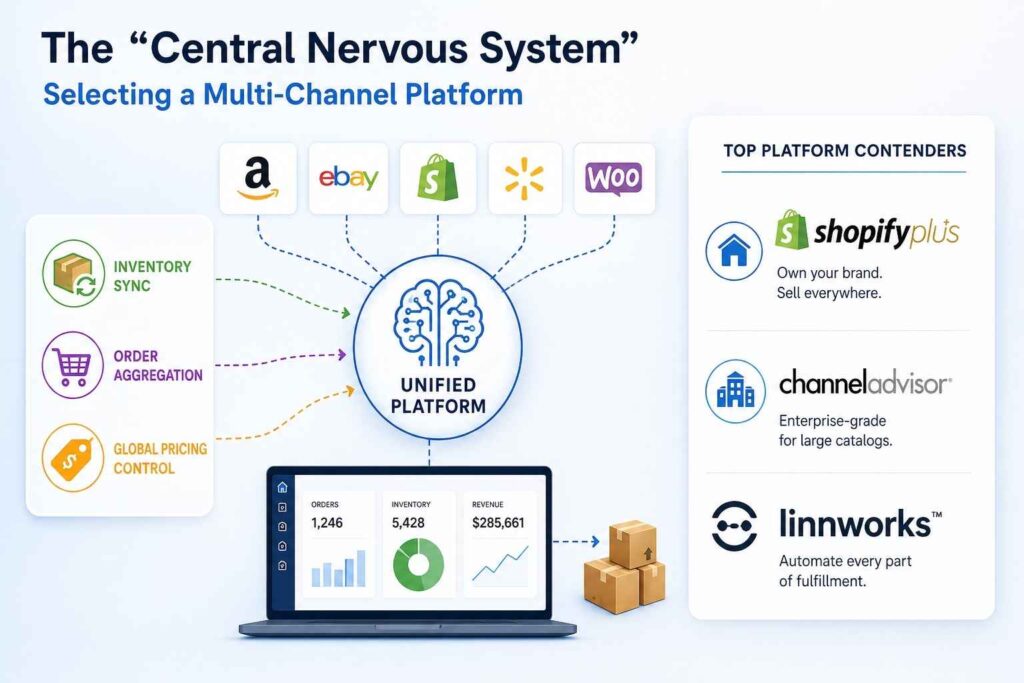
Trying to manage inventory, orders, and customer service separately for each site is a recipe for disaster. A multi-channel platform acts as a single source of truth for your business.
Key Benefits of a Unified Platform:
- Inventory Sync: When you sell an item on Amazon, the platform automatically updates your stock levels on eBay and your Shopify site. This prevents the dreaded “out of stock” cancellation, which can lead to account suspension.
- Order Aggregation: All orders flow into one dashboard, allowing your warehouse team to process shipments without logging into ten different accounts.
- Global Pricing Control: You can set a “Master Price” and apply rules for different channels (e.g., “+15% on Amazon to cover referral fees”).
Top Platform Contenders
- Shopify Plus: Ideal for those who want their own brand home while pushing products to marketplaces.
- ChannelAdvisor: An enterprise-grade solution for massive catalogs.
- Linnworks: Focused on “Total Commerce,” helping brands automate every part of the fulfillment process.
Strategic Integration: How to Launch Your Multi-Channel Strategy
Transitioning to a multi-channel marketplace model should be done in phases to ensure operational stability.
Phase 1: The Audit
Audit your existing listings. Are the titles optimized? Are the images high-resolution? Use product listing services to clean up your “Main” store (usually your website or Amazon) before pushing that data elsewhere.
Phase 2: Data Mapping
Each platform has different “attributes.” For example, a “T-shirt” on Shopify might have a “Size” attribute, while on eBay, it’s a “Item Specific.” Your multi-channel platform must map these correctly so your products appear in filtered searches.
Phase 3: Pilot Testing
Don’t launch your entire 5,000-item catalog on eBay overnight. Start with your top 10 best-sellers. Test the shipping workflows, monitor the customer messages, and ensure the inventory sync is working perfectly.
Overcoming Common Multi-Channel Challenges
Expansion is not without its hurdles. Here is how to navigate the most common pitfalls:
Avoiding “Duplicate Content” Penalties
While Google doesn’t strictly “punish” duplicate content in the way many believe, it will only rank one version of a product description. Ensure your product listing services create unique “introductory” copy for each platform while keeping technical specs consistent.
Managing Logistics and Returns
Returns are the silent killer of e-commerce margins. When selling across multiple channels, you need a clear policy.
- Tip: Use a centralized returns management tool that integrates with your multi-channel platform to give customers a seamless experience, regardless of where they bought the item.
Maintaining Brand Integrity
The biggest risk of selling on a third-party multi-channel marketplace is losing your brand identity.
- Solution: Use “Inserts” in your packaging. Even if a customer buys on Amazon, a beautiful “Thank You” card with your brand’s story and a QR code to your main website can turn a marketplace shopper into a loyal brand advocate.
The Future of Multi-Channel: Social Commerce and Beyond
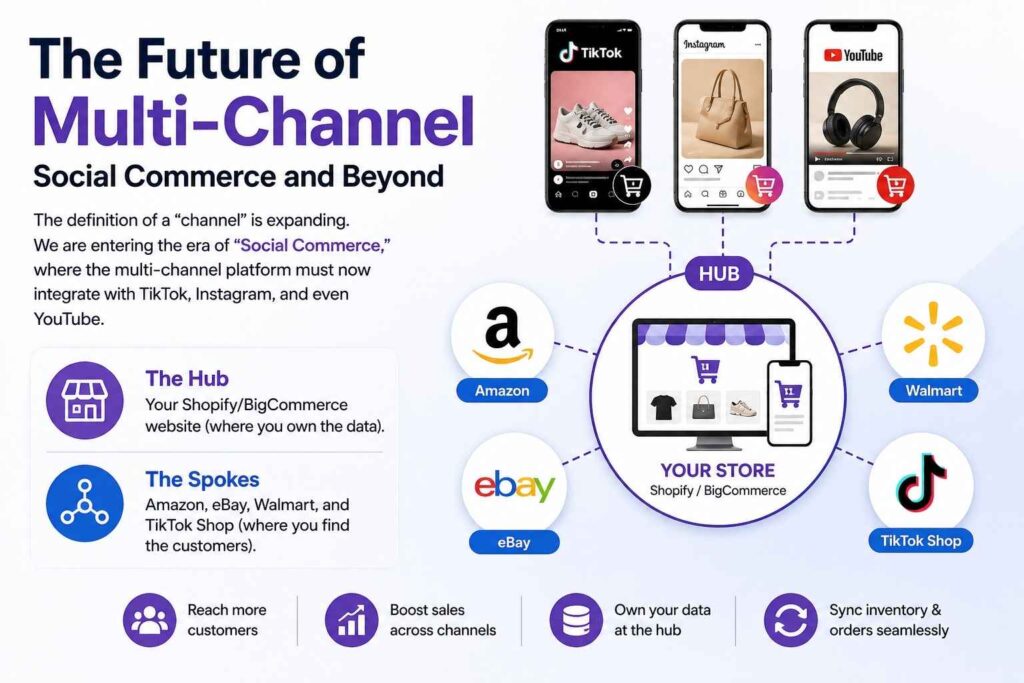
The definition of a “channel” is expanding. We are entering the era of “Social Commerce,” where the multi-channel platform must now integrate with TikTok, Instagram, and even YouTube.
Direct-to-consumer (DTC) brands are finding that the most successful strategy is a “Hub and Spoke” model:
- The Hub: Your Shopify/BigCommerce website (where you own the data).
- The Spokes: Amazon, eBay, Walmart, and TikTok Shop (where you find the customers).
In Summary
Scaling an e-commerce business in 2026 requires a blend of high-level strategy and granular execution. By investing in professional E-commerce product listing services and product listing services, you ensure that your “digital shelf” looks better than the competition. By implementing a powerful multi-channel platform, you ensure that your operations can handle the increased volume without breaking.
The multi-channel marketplace is vast, but with the right tools and data-driven listings, your brand can become a household name across Amazon, eBay, and beyond.
Leave a Reply