
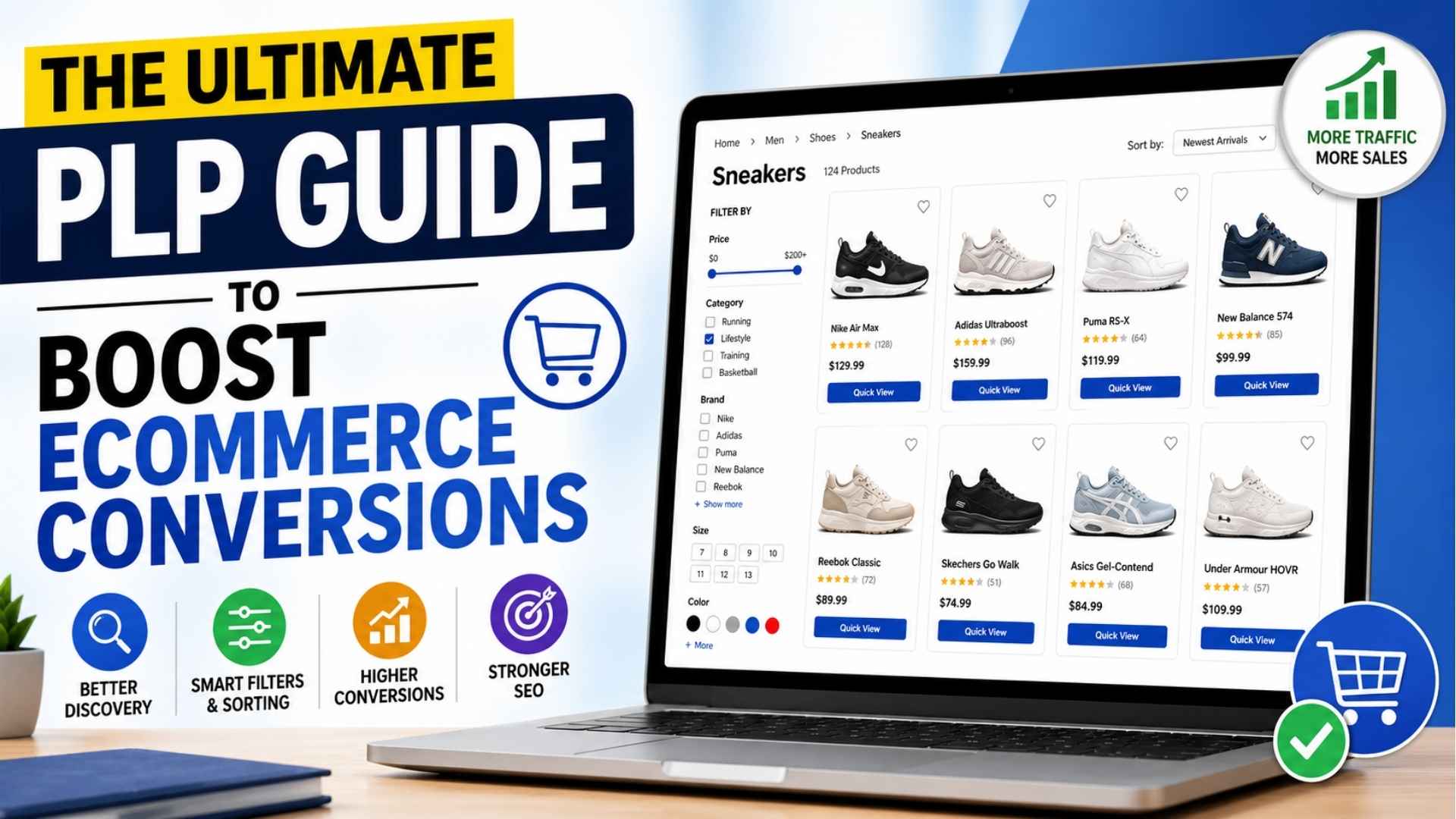
The path to purchase for consumers is shaped through a series of digital touchpoints as they move toward completing a transaction. One critical yet often overlooked touchpoint in this journey is the Product Listing Page (PLP).
To fully capitalize on this stage, businesses increasingly rely on professional E-commerce product listing services, which ensure that product data, images, keywords, and categorization are optimized for visibility and user experience. By combining well-structured PLPs with expert listing optimization, brand owners, SEO professionals, and eCommerce managers can significantly improve discoverability and turn casual browsers into loyal customers.
This comprehensive guide will walk you through what a PLP is, its role in the broader eCommerce ecosystem, and how it differs from other essential pages like the Product Detail Page (PDP), while highlighting how effective product listing services enhance overall performance.
What is a PLP? Understanding the Meaning in eCommerce
At its core, a Product Listing Page is a page on an eCommerce website that presents a list of products based on a specific category, search query, or filtered selection. If you think of an eCommerce site as a physical department store, the PLP is the aisle where similar items are shelved together. This is also where E-commerce product listing services play a crucial role, ensuring products are accurately categorized, optimized, and visually appealing to drive engagement and conversions.
PLP Meaning Explained
In the world of digital marketing and web development, “PLP” stands for Product Listing Page. Its primary purpose is to provide users with a “bird’s-eye view” of available merchandise. Instead of forcing a user to look at items one by one, the PLP allows them to scan dozens of options simultaneously to find the one that best fits their needs.
Common synonyms and related terms you will encounter include:
- Category Page
- Search Results Page (SERP) within a site
- Gallery Page
The Strategic Importance of PLPs
The PLP serves as a bridge. It sits between the homepage (the storefront) and the Product Detail Page (the specific item). A well-designed PLP performs several vital functions:
- Facilitates Discovery: It introduces customers to products they might not have been specifically looking for but are relevant to their interests.
- Reduces Friction: By using filters and sorting mechanisms, PLPs help users narrow down thousands of SKUs into a manageable selection.
- SEO Authority: For search engines, category-based PLPs are goldmines. They often rank for “broad-match” keywords (e.g., “running shoes” or “organic skincare”), which have higher search volumes than specific product names.
PLP vs. PDP: What is the Difference?
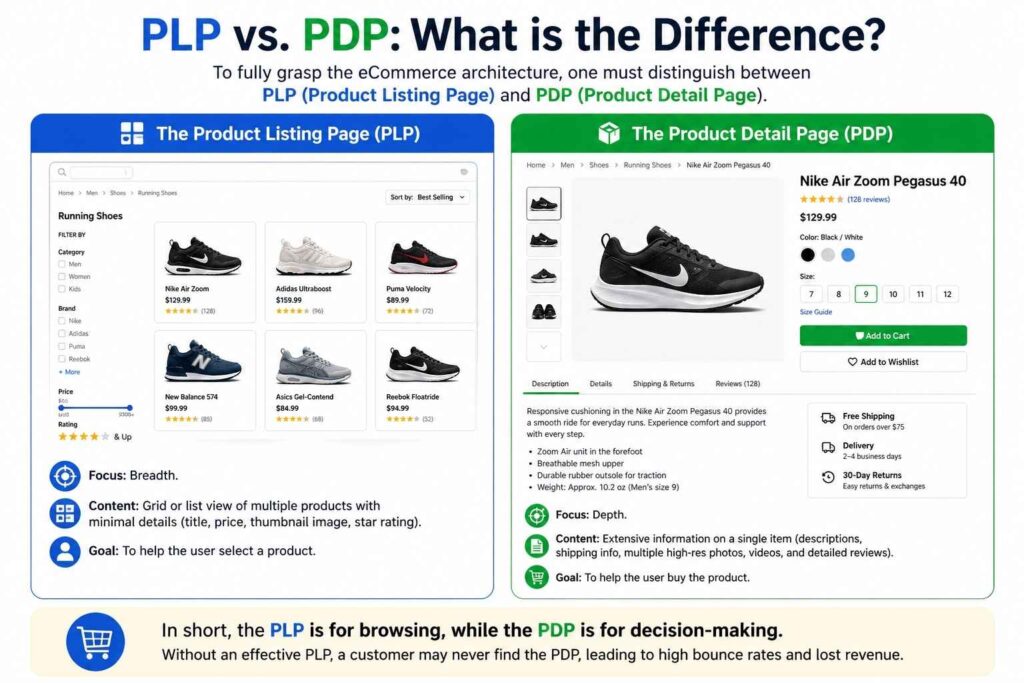
To fully grasp the eCommerce architecture, one must distinguish between PLP (Product Listing Page) and PDP (Product Detail Page).
The Product Listing Page (PLP)
- Focus: Breadth.
- Content: Grid or list view of multiple products with minimal details (title, price, thumbnail image, star rating).
- Goal: To help the user select a product.
The Product Detail Page (PDP)
- Focus: Depth.
- Content: Extensive information on a single item (descriptions, shipping info, multiple high-res photos, videos, and detailed reviews).
- Goal: To help the user buy the product.
In short, the PLP is for browsing, while the PDP is for decision-making. Without an effective PLP, a customer may never find the PDP, leading to high bounce rates and lost revenue.
Key Elements of a High-Converting Product Listing Page
Not all PLPs are created equal. A “bare-bones” list of links won’t satisfy a modern consumer who expects speed, clarity, and relevance. To truly optimize a PLP for both SEO and user experience, businesses must go beyond basic layouts and focus on structured, high-quality content. This is where product listing services play a crucial role, ensuring that product titles, descriptions, images, and attributes are not only accurate but also optimized with the right keywords and formatting. By leveraging professional listing strategies alongside essential elements like intuitive navigation, filters, sorting options, and compelling visuals, brands can create a seamless browsing experience that keeps users engaged and drives higher conversions.
1. Breadcrumb Navigation
Breadcrumbs (e.g., Home > Men’s Shoes > Sneakers) help users understand where they are in the site hierarchy. They also provide search engines with a clear map of your site structure, distributing “link equity” effectively.
2. Robust Filtering and Sorting (Faceted Search)
The hallmark of a great PLP is its “faceted navigation.” This allows users to filter by:
- Price range
- Size and color
- Brand
- Customer rating
- Material or features
Sorting options (e.g., “Newest Arrivals,” “Price: Low to High”) further empower the user to control their shopping experience.
3. Clear Product Imagery
On a PLP, the image does the heavy lifting. High-quality thumbnails that show the product clearly are non-negotiable. Some advanced PLPs utilize “hover effects” where the image changes to show a different angle or a model wearing the item when the mouse scrolls over it.
4. Direct “Add to Cart” or “Quick View.”
To speed up the conversion funnel, many modern eCommerce sites include a “Quick View” button or a direct “Add to Cart” option on the PLP. This is particularly effective for “low-involvement” goods where the customer doesn’t need to read a long description to make a choice.
SEO Best Practices for Product Listing Pages
If you want your PLPs to rank on the first page of Google, you must treat them as independent landing pages. Here is how to optimize them:
Unique H1 Tags and Meta Descriptions
Each PLP should target a specific category keyword. Avoid generic titles like “Products.” Instead, use descriptive titles like “Professional eCommerce Optimization Services” or “Sustainable Kitchenware Collection.”
Category Descriptions (Content at the Bottom)
One common mistake is having a PLP with zero text. Adding 200–300 words of optimized content at the bottom of the page (below the product grid) provides context to search engine crawlers without distracting the user from the products.
Mobile Responsiveness
Since a large percentage of eCommerce traffic comes from mobile devices, your PLP grid must be responsive. A three-column grid on desktop should seamlessly transition to a one or two-column grid on mobile to ensure images remain clickable and text remains legible.
The Future of PLPs: Personalization and AI
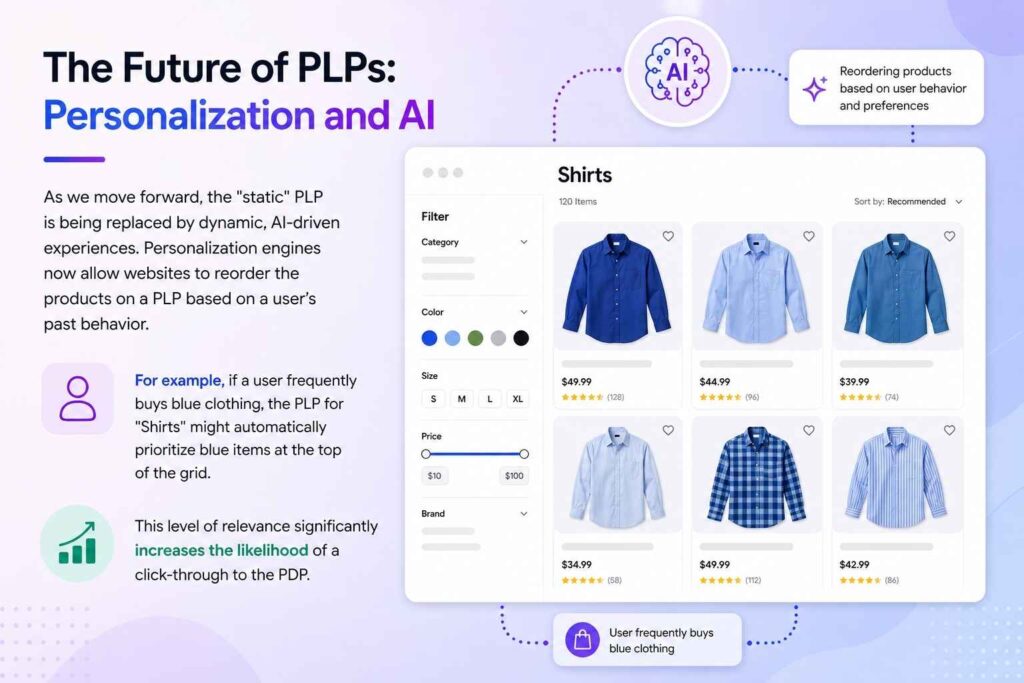
As we move forward, the “static” PLP is being replaced by dynamic, AI-driven experiences. Personalization engines now allow websites to reorder the products on a PLP based on a user’s past behavior.
For example, if a user frequently buys blue clothing, the PLP for “Shirts” might automatically prioritize blue items at the top of the grid. This level of relevance significantly increases the likelihood of a click-through to the PDP.
Conclusion
Understanding the importance of a PLP (Product Listing Page) is key to building a successful eCommerce business. A PLP is more than just a product list; it organizes items in a way that improves discovery and user experience. With professional product listing services, businesses can ensure accurate data, relevant keywords, and high-quality visuals. A well-optimized PLP boosts visibility, builds trust, and increases conversions.
To convert your PLPs from basic galleries to powerful sources of increasing sales, ensure that your customers can easily navigate through your product catalog, effectively filter their searches, and utilize content on your website that has been created with SEO techniques.
Leave a Reply