
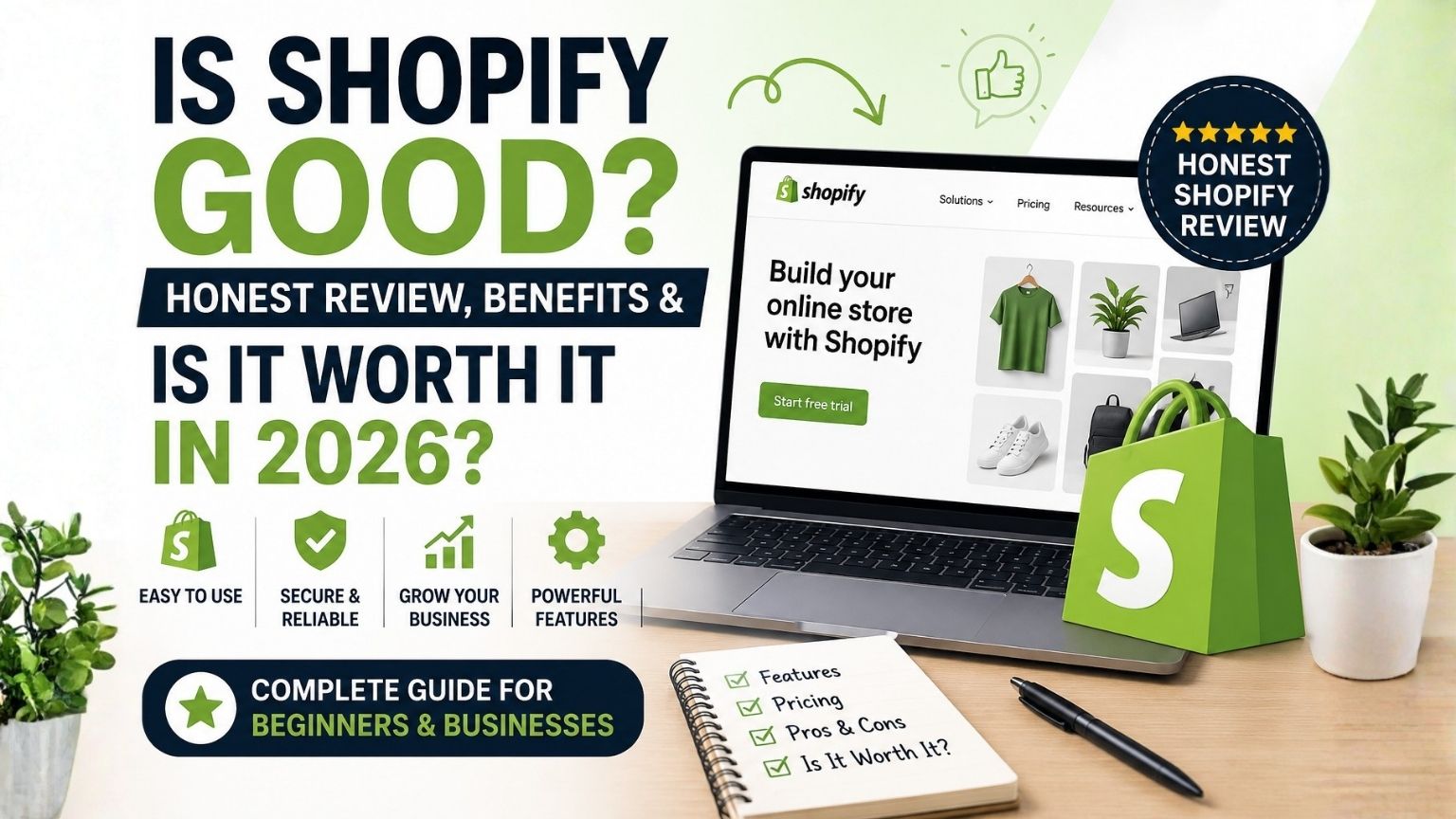
For anyone looking to launch or scale an online store, one name continuously dominates the conversation: Shopify. It powers millions of businesses worldwide, from weekend side hustles to publicly traded brands. But popularity does not automatically mean it is the right fit for your specific business model, budget, or technical skill level.
If you are asking yourself whether Shopify is truly good, whether it is worth the monthly investment, or if you should use it over competing platforms, you need an unvarnished examination of how it functions in practical situations. This comprehensive analysis breaks down exactly what Shopify is, evaluates its core benefits, analyzes its cost structure, and explores the practical pros and cons of building your business on this ecommerce giant.
Understanding the Shopify Ecosystem: What Exactly Is It?
At its core, Shopify is a fully managed, cloud-based, software-as-a-service (SaaS) ecommerce platform. In plain terms, this means you do not buy software, you do not need to secure your own web hosting, and you do not have to worry about maintaining servers, installing security patches, or managing website uptime.
When you pay for a Shopify subscription, you are renting an all-in-one digital storefront infrastructure. Shopify provides the content management system (CMS) to handle your products, the payment gateway processing architecture to accept customer credit cards, the secure hosting needed to handle massive traffic spikes, and the basic design framework to make your store look professional.
This all-in-one approach is precisely why Shopify became popular. Before the SaaS model took over, launching an online store required buying a domain, finding a specialized ecommerce hosting provider, installing open-source software like WordPress or Magento, configuring SSL security certificates manually, and hiring developers to hook up a payment gateway. Shopify compressed that multi-week, highly technical headache into a setup process that can be completed in a single afternoon.
The Core Benefits of Using Shopify
To evaluate whether Shopify is worth the investment, it is essential to understand the specific operational advantages it brings to an ecommerce business owner.
1. Unmatched Ease of Use and Accessibility
The most significant selling point of Shopify is its accessibility for beginners. You do not need to know a single line of HTML, CSS, or PHP code to build a beautiful, functional store. The modern Shopify platform utilizes an intuitive online store editor featuring a drag-and-drop section builder. You can easily add image banners, text blocks, product grids, and video elements to your pages, customizing the layout visually while seeing changes occur in real-time.
The administrative dashboard is equally user-friendly. Managing inventory, tracking incoming orders, issuing customer refunds, and viewing sales analytics are handled through a clean, centralized interface that requires almost zero learning curve.
2. World-Class Infrastructure, Speed, and Security
Website performance directly influences conversion rates and search engine rankings. A slow-loading checkout page or an unexpected server crash during a holiday sales rush can ruin a business. Shopify handles all infrastructure scaling automatically. Their servers are optimized specifically for ecommerce, utilizing global Content Delivery Networks (CDNs) to ensure your website loads lightning-fast for visitors anywhere in the world.
Additionally, each Shopify store comes with a complimentary SSL certificate and functions with Level 1 PCI-DSS compliance by default. This means your customer payment data is protected by bank-grade security protocols, shielding you from the massive legal and technical responsibilities of managing secure financial transactions on your own hardware.
3. A Massive, Scalable App Ecosystem
No single platform can natively include every single feature that every distinct business requires. Shopify solves this through the Shopify App Store, a massive marketplace containing thousands of third-party integrations and plugins.
Whether you need specialized apps to deliver digital products, Shopify allows you to seamlessly connect instant download links, set up recurring subscription payments, create complex product bundling options, generate custom wholesale pricing tiers, or connect your customer service to a live-chat helpdesk, there is an app available to do it. This ecosystem ensures that your website can grow and transform dynamically alongside your business volume without requiring you to switch platforms later.
4. Native Multi-Channel Selling Omnipresent Support
Shopify acts as a central command center for your entire retail operation. You are not restricted to selling exclusively on your own website. Shopify features native integrations that allow you to sync your product catalog seamlessly across major digital marketplaces and social platforms, including Amazon, eBay, Instagram, Facebook, TikTok, and Pinterest.
If you sell items in person through a physical brick-and-mortar storefront, a pop-up market, or a retail boutique, the Shopify POS (Point of Sale) system links your physical sales directly with your digital inventory database, completely preventing overselling or stock discrepancies.
The True Cost of Shopify: Is It Worth It Economically?

An honest review requires looking past marketing claims and analyzing the financial reality of running a Shopify store. Shopify uses a recurring monthly subscription model alongside transaction fees, which can impact your profit margins if you do not plan carefully.
Subscription Tiers
Shopify offers multiple distinct pricing levels tailored to different operational scales:
- Shopify Starter: A minimal plan designed for selling products exclusively through social media apps or messaging platforms without a full online storefront.
- Basic Shopify: Ideal for solo entrepreneurs and new startups, offering full website creation, unlimited product listings, and basic reporting.
- Shopify (Standard): Designed for growing businesses, adding advanced professional report generation and additional staff account access.
- Advanced Shopify: Tailored for high-volume stores needing custom report builders, calculated third-party shipping rates, and lower transaction fees.
- Shopify Plus: An enterprise-grade solution built for massive global brands processing millions of dollars in monthly transaction volume.
The Hidden Costs: Transaction Fees and App Subscriptions
The monthly base fee is only part of the equation. If you choose to use an external payment gateway like PayPal, Stripe, or Authorize.Net instead of Shopify’s native payment processor (Shopify Payments), Shopify charges an additional transaction fee ranging from 0.5% to 2.0%, depending on your plan tier. To maximize your profit margins, you should ideally use Shopify Payments, which waives these extra platform transaction fees entirely.
Additionally, while many basic apps are free, advanced plugins for search engine optimization, automated email marketing, or inventory management frequently require their own monthly recurring subscriptions. It is remarkably easy for a business owner to buy a standard subscription but end up paying double that amount monthly due to an accumulation of premium app add-ons.
Evaluating the Advantages and Disadvantages: A Practical Evaluation
To determine whether you should use Shopify, it helps to balance its strengths directly against its structural limitations.
The Clear Advantages (The Pros)
- Zero Technical Management: You focus exclusively on product sourcing, branding, content marketing, and driving customer acquisition, while Shopify manages the technology.
- Exceptional Customer Support: Shopify provides 24/7 customer support via live chat and email, ensuring you are never left helpless during a technical disruption.
- Beautiful, Mobile-Responsive Themes: Both free and premium themes are heavily optimized for mobile shoppers, which is critical since mobile traffic constitutes more than half of all internet commerce.
- Built-in SEO and Marketing Tools: The platform makes it simple to edit clean SEO page titles, meta descriptions, image alt tags, and custom URL redirects out of the box.
The Structural Drawbacks (The Cons)
- Platform Lock-in and Dependence: Because Shopify uses proprietary code architecture, you cannot simply export your website design and host it somewhere else. If you decide to leave Shopify in the future, you must rebuild your entire storefront from scratch on your new platform.
- Limited Core Customization: While the visual editor is powerful, making highly customized design changes outside the boundaries of your chosen theme requires modifying Shopify’s unique coding language, Liquid. Non-technical users will need to hire a specialized developer for heavy structural alterations.
- Content Marketing Limitations: While Shopify features built-in blogging functionality sufficient for standard content marketing and updates, its blogging engine is nowhere near as robust or flexible as dedicated content platforms like WordPress.
Should You Use Shopify? The Final Verdict
Ultimately, determining whether Shopify is good depends entirely on your specific business situation, technical capabilities, and short-term growth goals.
Shopify is ideal for you if:
- You are a beginner, solo entrepreneur, or small business team that wants to launch an online storefront quickly without dealing with coding, server management, or complex security updates.
- You want a highly reliable platform that can effortlessly scale to handle viral traffic bursts or holiday sales volume without crashing.
- Your business model heavily relies on selling across multiple channels, such as syncing inventory across your website, social media feeds, and physical retail locations.
Shopify might not be ideal for you if:
- You require absolute control over every piece of code, database architecture, and hosting server configuration.
- You are operating on an incredibly tight budget where any recurring monthly subscription fees or transaction costs make your business model financially unviable.
- Your primary business focus is content publishing, and ecommerce is merely a secondary, minor feature of your website.
For the vast majority of retail entrepreneurs and established brands looking for a stable, secure, highly scalable, and user-friendly platform, Shopify is absolutely worth the price of admission. It removes the friction of technical development, allowing you to dedicate your energy to what truly generates revenue: building your brand and selling products.
Leave a Reply