
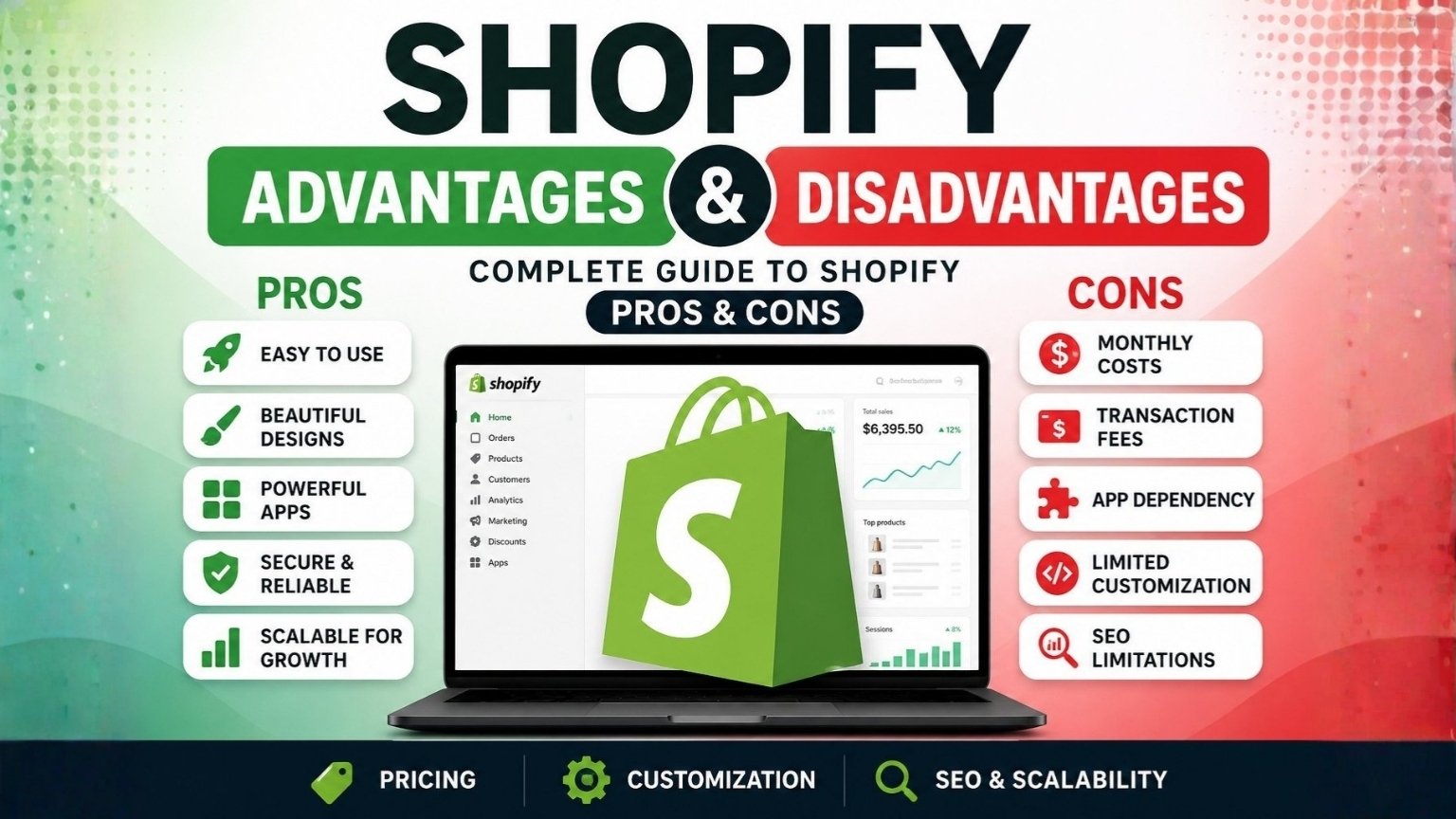
Choosing the ecommerce platform is a big decision for any online business. There are a lot of options there but Shopify is one of the most popular ecommerce solutions for startups, small businesses, and big brands like enterprise brands. Lots of online stores use Shopify, from fashion stores to electronics businesses, because it helps them manage products, payments, shipping and customer experiences However Shopify is not perfect it has things and not s o good things.
Some business owners really like how simple and easy to use Shopify is and that it can grow with their business. But other business owners do not like the prices they feel it is too expensive or that they cannot make their store look how they want, or that they have to pay fees when they make a sale. This is why it is really important to know what is good and what is not so good about Shopify before you start your store.
What Is Shopify?
Shopify is a cloud-based ecommerce platform that allows businesses to create and manage online stores without needing advanced technical knowledge. It provides tools for product management, website design, payment processing, inventory management, shipping, and marketing.
Shopify is widely used for selling physical products, but it is also a powerful platform for businesses offering digital products Shopify solutions such as ebooks, online courses, software downloads, templates, and digital memberships.
Today, Shopify powers businesses of all sizes, from small home-based brands to large international companies.
The Biggest Advantages of Shopify
Easy Setup for Beginners
One of the main reasons Shopify became so popular is its beginner-friendly interface. Unlike traditional ecommerce development platforms that require coding knowledge, Shopify makes it possible for almost anyone to create an online store.
The dashboard is clean and easy to understand. Store owners can upload products, manage orders, customize themes, and process payments without technical expertise.
For entrepreneurs starting their first online business, this simplicity can save both time and money. Instead of hiring developers for every small change, many tasks can be handled directly from the admin panel.
This ease of use is one of the strongest Shopify pros for beginners and small businesses.
Professional Store Designs
Shopify provides professionally designed themes that help businesses create attractive online stores. These themes are mobile-responsive, modern, and optimized for ecommerce conversions.
Whether someone is selling clothing, electronics, beauty products, or digital goods, Shopify themes make it easy to create a polished and trustworthy website.
Another advantage is that users can customize themes without rebuilding the entire site structure. Businesses that want advanced customizations can also edit the code or hire Shopify developers.
This flexibility allows brands to build unique online shopping experiences while still using Shopify’s infrastructure.
Reliable Hosting and Security
Managing website hosting and security can be difficult for ecommerce businesses. Shopify simplifies this process by providing built-in hosting and security features.
Every Shopify store includes SSL certificates, reliable servers, automatic updates, and protection against technical issues. This means store owners do not need to worry about purchasing separate hosting plans or maintaining server security.
Website speed and uptime are also important advantages. A slow ecommerce website can reduce conversions and hurt SEO rankings, but Shopify is known for strong performance and reliability.
For many businesses, this is one of the most valuable Shopify advantages because it reduces technical maintenance.
Strong App Ecosystem
Another major advantage of Shopify is its large app marketplace. Businesses can install apps for email marketing, SEO, upselling, customer support, dropshipping, inventory management, analytics, and automation.
This allows online stores to expand functionality without building custom software from scratch.
For example, businesses can connect apps for:
- Product reviews
- Abandoned cart recovery
- Social media marketing
- Loyalty programs
- Multi-language stores
- Subscription products
The Shopify app ecosystem helps businesses grow faster while keeping operations organized.
Excellent Payment and Checkout System
Shopify offers a smooth checkout experience that helps improve conversion rates. Customers can easily complete purchases using multiple payment methods, including credit cards, wallets, and local payment gateways.
The platform also provides its own payment system called Shopify Payments, which simplifies transaction processing.
Checkout optimization is extremely important in ecommerce because complicated payment systems often increase cart abandonment rates. Shopify’s streamlined checkout is one of the reasons why many brands choose the platform.
Scalability for Growing Businesses
One of the biggest Shopify pros is scalability. Businesses can start small and continue growing without changing platforms.
Whether a company receives ten orders per month or thousands of orders daily, Shopify infrastructure can handle increased traffic and sales volume.
Large businesses can also use Shopify Plus for enterprise-level ecommerce solutions. This makes Shopify suitable for startups as well as rapidly growing brands.
The Main Disadvantages of Shopify
Although Shopify offers many benefits, there are also several limitations businesses should understand before choosing the platform.
Monthly Costs Can Increase
One of the most common Shopify cons is pricing. While Shopify seems affordable initially, costs can increase significantly as businesses grow.
Store owners usually pay for:
- Monthly subscription plans
- Premium themes
- Paid apps
- Transaction fees
- Custom development
- Marketing tools
Many important features require third-party apps, and these monthly subscriptions can add up quickly.
For small businesses with tight budgets, Shopify can sometimes become more expensive than expected.
Transaction Fees
Shopify charges additional transaction fees if businesses use third-party payment gateways instead of Shopify Payments.
This is a major concern for some merchants because payment processing costs directly affect profit margins.
Although Shopify Payments removes extra transaction fees in many regions, businesses in unsupported countries may still face additional charges.
This issue is frequently mentioned when discussing Shopify disadvantages.
Limited Advanced Customization
While Shopify is beginner-friendly, advanced customization can sometimes be difficult.
Businesses that need highly customized ecommerce experiences may encounter limitations because Shopify controls much of the platform infrastructure.
Unlike open-source platforms such as WooCommerce or Magento, Shopify users do not have complete server-level control.
Complex custom features often require experienced Shopify developers and knowledge of Liquid, Shopify’s templating language.
For brands needing total design freedom or advanced backend systems, this can be a disadvantage.
Dependence on Apps
The Shopify app marketplace is helpful, but relying heavily on apps can create challenges.
Too many installed apps may:
- Slow down website performance
- Increase monthly expenses
- Cause compatibility issues
- Create unnecessary complexity
Some businesses discover that essential features are not built directly into Shopify and require additional paid tools.
This dependency on apps is one of the most commonly discussed Shopify cons among experienced ecommerce store owners.
Content Management Limitations
Although Shopify is excellent for ecommerce, its blogging and content management features are not as strong as platforms like WordPress.
Businesses focused heavily on content marketing, blogging, or advanced SEO structures may feel limited by Shopify’s CMS capabilities.
For example, advanced blog customization, content organization, and dynamic SEO flexibility are often easier on dedicated content platforms.
This is why some companies use headless commerce setups or integrate Shopify with other CMS systems.
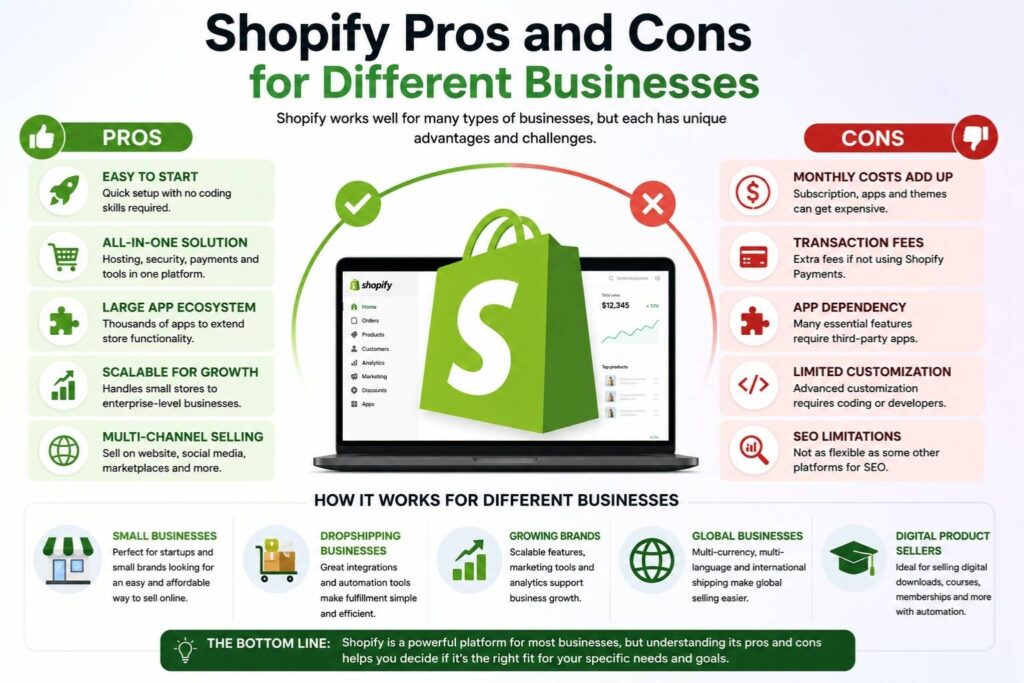
Shopify Pros and Cons for Different Businesses
Best for Small Businesses and Startups
Shopify works extremely well for startups because it reduces technical complexity. Entrepreneurs can launch stores quickly without managing servers, coding, or security.
For small businesses, the platform provides a fast path to online selling.
Good for Dropshipping Businesses
Many dropshipping businesses prefer Shopify because of its app integrations and simple order management system.
Apps like DSers and Printful integrate easily with Shopify, helping sellers automate fulfillment processes.
Useful for Scaling Brands
Growing ecommerce brands often choose Shopify because it handles increasing traffic and sales efficiently.
Businesses can expand internationally, add multiple sales channels, and improve automation without rebuilding their infrastructure.
Not Ideal for Extremely Custom Projects
Businesses requiring advanced custom functionality, highly specialized workflows, or complete backend control may prefer open-source ecommerce platforms instead.
In such cases, Shopify’s simplicity may become restrictive.
Is Shopify Worth It?
For most ecommerce businesses, Shopify remains one of the best ecommerce platforms available today. It combines simplicity, reliability, scalability, and professional design into one system.
However, Shopify is not perfect for everyone.
Businesses should carefully evaluate their goals, technical requirements, budget, and long-term growth strategy before choosing the platform.
If ease of use, fast setup, and scalability are priorities, Shopify is often an excellent choice. But if total customization and lower long-term costs are more important, other ecommerce solutions may be worth considering.
Final Thoughts on Shopify Advantages and Disadvantages
Understanding Shopify’s advantages and disadvantages helps businesses make smarter ecommerce decisions. Shopify offers powerful tools, beginner-friendly features, secure hosting, and strong scalability, making it ideal for many online stores.
At the same time, businesses should also consider Shopify cons such as rising costs, app dependency, transaction fees, and customization limitations.
The best ecommerce platform depends on your business goals, technical needs, and growth plans. By carefully evaluating Shopify’s pros and cons, you can decide whether Shopify is the right foundation for your online store’s success.
Leave a Reply