
The internet has changed how people buy and sell things. Today anyone with a product idea, a creative skill or some inventory can start a business from home. You can sell crafts, digital products, fashion items, electronics or even used goods online. This opens the door to a customer base and lots of growth opportunities.
Many people ask, “How do I sell things online?”. What is the easiest way to start selling products from home?” The good news is that starting a business is easier than ever. You do not need a store a large warehouse or a lot of money to begin. However selling online is not about putting products online and waiting for customers.
To sell online successfully you need to think about branding making your products easy to find building trust, with customers creating product pages and marketing your products. This guide tells you everything you need to know about selling things.
Understanding the Online Selling Landscape
Online selling is not about listing things on a website anymore. People who buy things online want to see websites that load fast have pictures and are easy to use. They want to know how much things cost and be able to pay for them.
When people shop online they can not touch the things they want to buy. So the pages that show your products are like the people who sell things in a store. Every picture, every word that describes a product and every design thing can make someone decide to buy something or not.
Nowadays people use their phones to shop and they use social media to find things to buy. They also use things that can think for themselves like computers to help them find things. People find things to buy by using search engines, social media and looking at what other people say about things. They also see ads online. Get suggestions from websites that sell things. This means that businesses need to make sure they look good and can be trusted on lots of websites.
If you want to sell things and make money you need to understand how people shop online nowadays. This is the step to making a successful online business. You need to know what online selling is all, about and how people behave when they shop online.
Choosing the Right Products to Sell Online
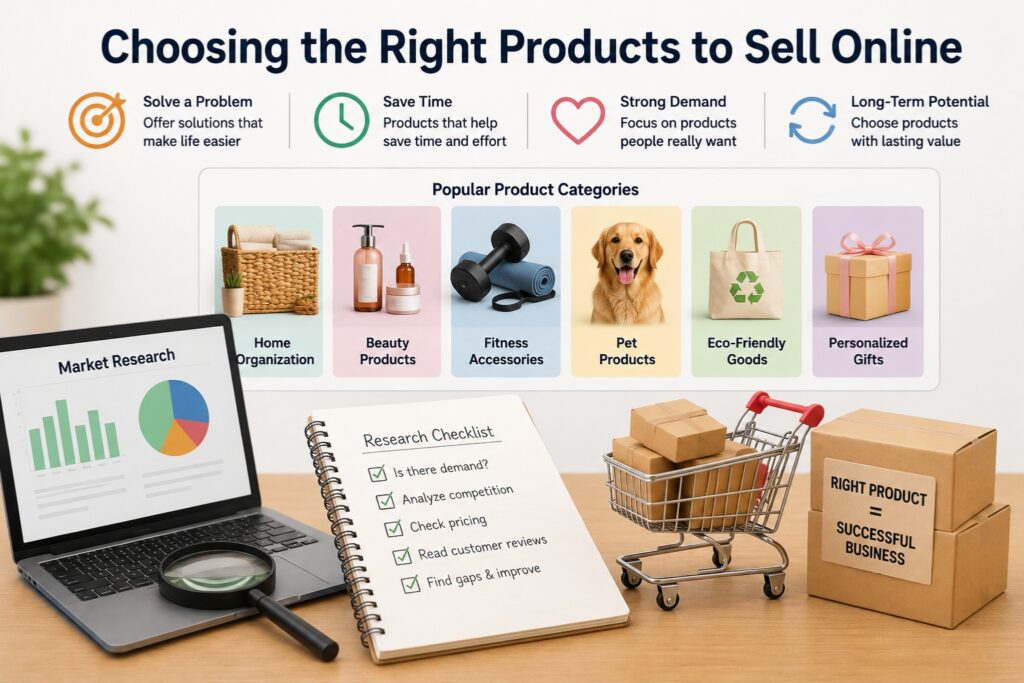
One of the decisions you have to make is picking the right products to sell. A lot of people who’re new to selling things online fail because they only think about products they like not products that people are actually looking for and want to buy.
The best things to sell online are usually things that help people with a problem make their lives easier save them time or are something they really want. These kinds of products do well because people can see away how they will help them.
For example people really like to buy things like home organization products, beauty items, fitness accessories, pet products, eco-friendly goods and personalized gifts when they shop online. People are also really into products like templates, online courses and designs they can download because they do not have to worry about getting them shipped.
Before you pick a product to sell you need to do some research to see if people want it how many other people are selling it how much it costs and what people think of it. You can read what people are saying about products on websites and forums to see what they do not like and how you can make it better.
People who are good at selling things also think about how they can keep selling a product for a long time. Some products might be popular, for a while because they are trendy but good businesses usually sell products that people will always want to buy.
Building a Strong Online Store
Your e-commerce site is the cornerstone of your enterprise. Even if you sell through marketplaces, having your own website gives you greater control over branding, customer relationships, and profitability.
A professional eCommerce website creates trust and improves conversion rates. Customers are more likely to buy from businesses that appear reliable, modern, and easy to navigate.
The structure of your website should focus on simplicity and usability. Visitors should quickly understand what you sell, why your products are valuable, and how to complete a purchase.
Your homepage should clearly communicate your brand identity and product categories. Product pages should include detailed descriptions, pricing, shipping information, customer reviews, and high-quality images.
Page speed is another critical factor. Websites that load slowly annoy users and lead to higher bounce rates. Mobile optimization is equally important because a large percentage of online shopping now happens through smartphones.
A strong online store combines visual appeal with functionality. Clean layouts, intuitive menus, secure checkout systems, and professional branding all contribute to customer confidence.
The Importance of Product Images and Visual Content
Visual presentation plays a massive role in online selling success. Since customers cannot physically inspect products, images become one of the primary factors influencing purchase decisions.
High-quality product photography helps customers understand the product’s size, texture, functionality, and overall value. Professional visuals also create a stronger brand image and improve trustworthiness.
The best product listings typically include multiple image angles, close-up details, lifestyle images, and contextual usage examples. Lifestyle photography is especially effective because it helps customers imagine the product in real-life situations.
For example, instead of only showing a chair against a plain background, a lifestyle image may display the chair inside a beautifully designed living room. This emotional connection can significantly improve conversion rates.
Video content is also becoming increasingly important in e-commerce. Short product demonstrations, unboxing videos, and tutorial clips provide additional confidence to potential buyers.
Writing Product Descriptions That Convert
Many businesses underestimate the importance of product copywriting. A great product description does more than explain features—it helps customers understand how the product improves their lives.
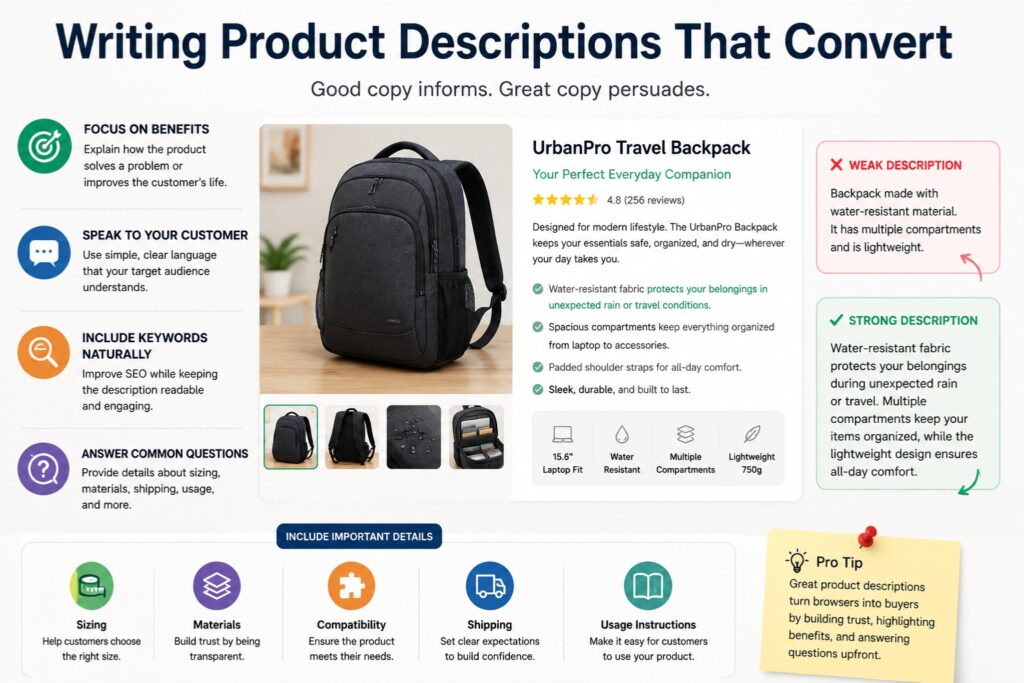
Effective product descriptions focus on benefits rather than technical details alone. Instead of simply listing specifications, successful copy explains why those features matter to the customer.
For instance, rather than saying a backpack has “water-resistant material,” a stronger description might explain how the material protects important belongings during unexpected rain or travel conditions.
Clear, persuasive, and easy-to-read descriptions help reduce uncertainty and improve buyer confidence. They also improve SEO performance by naturally incorporating relevant keywords customers search for online.
Good product copy should answer common customer questions before they are asked. Information about sizing, materials, compatibility, shipping, and usage instructions can help reduce abandoned carts and customer support inquiries.
Using SEO to Increase Online Sales
Search engine optimization plays a major role in attracting free organic traffic. When customers search for products or solutions online, optimized websites have a better chance of appearing in search results.
SEO begins with understanding customer intent. People searching “how to sell online” may want educational information, while someone searching for a specific product is closer to making a purchase.
Optimizing product titles, category pages, blog content, image alt text, and meta descriptions can improve visibility in search engines. Informative content also helps establish authority and trust.
Creating educational blog posts related to your products can attract potential customers during the research phase. For example, a skincare brand might publish guides about skincare routines, ingredient comparisons, or seasonal skin care tips.
Internal linking between product pages and informational content also improves website structure and user navigation.
SEO is a long-term strategy, but businesses that consistently create helpful and relevant content often experience sustainable traffic growth over time.
Marketing Your Online Store
Even the best online store needs marketing to generate visibility. Digital marketing helps businesses attract new customers and build brand recognition.
Social media platforms are powerful tools for showcasing products and connecting with audiences. Consistent posting, engaging visuals, and authentic storytelling can increase customer engagement and trust.
Email marketing remains one of the highest-converting channels for online businesses. Welcome emails, abandoned cart reminders, promotional campaigns, and product recommendations can encourage repeat purchases.
Paid advertising through search engines and social media platforms can also generate targeted traffic quickly. However, successful advertising campaigns require compelling visuals, strong copywriting, and optimized landing pages.
Building Customer Trust and Loyalty
Trust is one of the most important factors in eCommerce success. Customers are cautious when purchasing from unfamiliar websites, especially with growing concerns about scams and low-quality products.
Transparent communication helps build confidence. Clear return policies, shipping details, contact information, and customer reviews reassure buyers and reduce hesitation.
Favorable customer interactions frequently result in repeat buying and recommendations to others. Fast response times, reliable shipping, and helpful customer service contribute to long-term loyalty.
User-generated content, such as customer photos and testimonials, also adds authenticity. Real experiences from previous buyers can strongly influence future customers.
Selling Products Online From Home
A major benefit of e-commerce is its flexibility. Many successful businesses begin from home with minimal investment.
Home-based online selling allows entrepreneurs to reduce overhead costs while testing products and business ideas. Some sellers manage inventory themselves, while others use dropshipping or print-on-demand services to avoid storage challenges.
Creating a dedicated workspace, maintaining organized inventory systems, and managing shipping efficiently are important for smooth operations.
As the business grows, automation tools for inventory management, order tracking, email marketing, and customer support can save time and improve scalability.
Final Thoughts
To sell things online you need to do more than just put items on a website. You have to know what your customers like make your brand look good make sure your products are easy to find and make people trust you by being really good at what you do.
Online selling is a way to make money whether you want to start a small business on the side start a big business or just find new ways to make money.
The businesses that do well are the ones that always try to make their websites better figure out what customers want put out content and change when things in the market change.
If you focus on being good to people making them trust you and making sure they like using your website you can build an online presence that gets people to come to your site and helps your business grow over time in the world of online selling, which is a very competitive place and online selling is all, about that.
Leave a Reply