
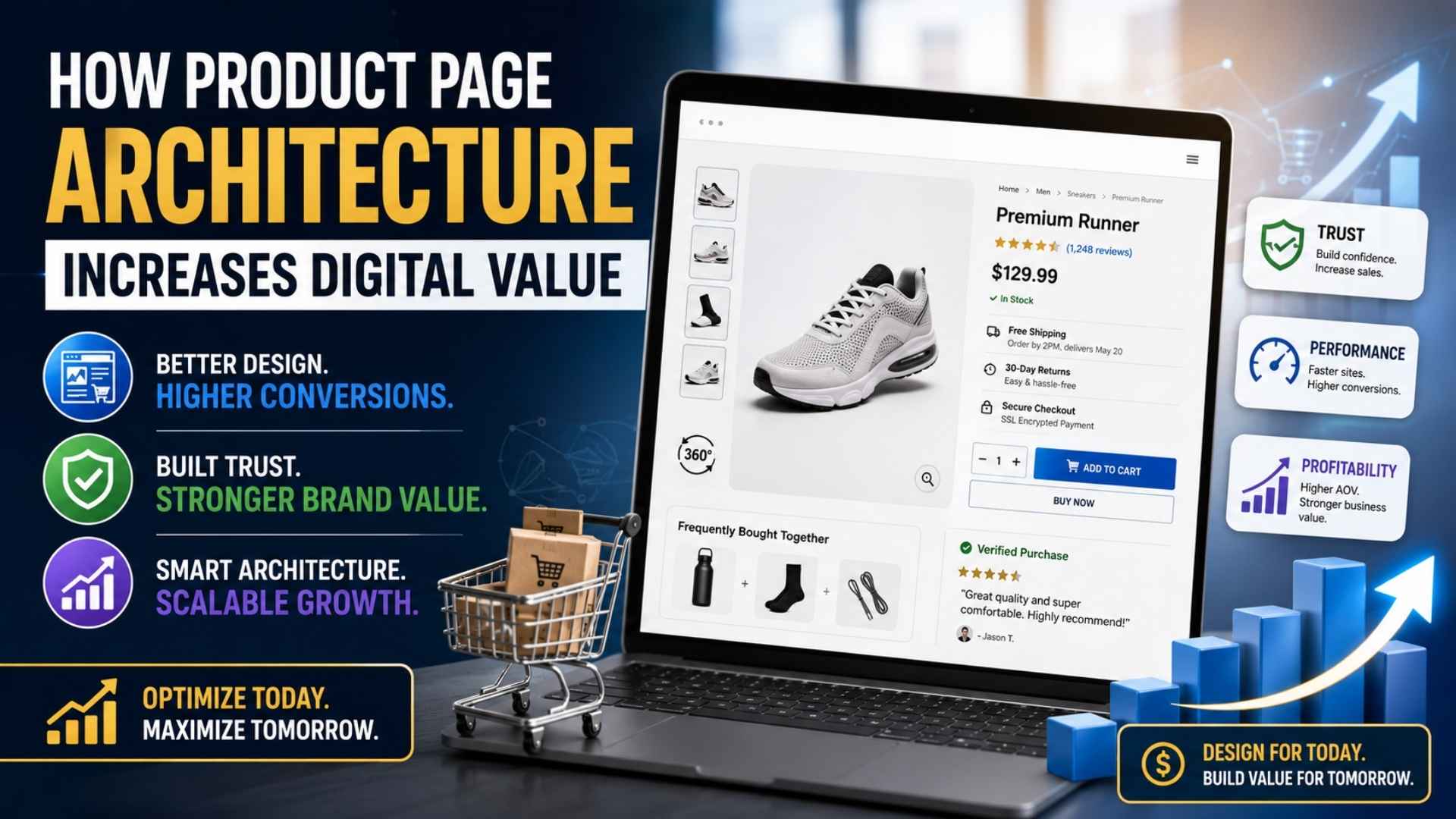
The website’s value greatly hinges on its ability to achieve conversions from visitors to customers, which provides the opportunity for future business expansion and success.
Strongly designed storefronts, excellent user experience with a concentration on the user, as well as adequate technical optimization, will help you generate revenue and provide your customers with a higher level of interaction. When combined, they create a business that can grow and be successful for many years to come.
How Smart Storefront Design Increases Business Value
Building a successful brand requires a shift from broad marketing to data-driven optimization. A well-designed storefront builds trust, reduces friction, and helps turn visitors into loyal customers through a smooth shopping experience.
In today’s competitive market, e-commerce product page design is a key factor in increasing sales and business value. A strong product page should answer customer concerns, provide social proof, and create a seamless path to purchase.
Key Pillars of a High-Performance Product Layout
To reach a standard of excellence that attracts premium buyers, a product page must be treated as a comprehensive, standalone landing page. Every pixel should serve a documented purpose, guiding the user toward the final conversion goal while reinforcing the brand’s authority and market position.
1. Visual Storytelling and Technical Performance
In the digital space, the customer suffers from a “sensory gap”; they cannot touch, smell, or feel the product. Therefore, the visual presentation must overcompensate for the lack of physical interaction. However, aesthetic beauty must never come at the cost of technical performance.
- Dynamic Zoom and 360-Degree Views: Allowing users to inspect textures, seams, and fine details increases buyer confidence and reduces return rates.
- The Velocity Factor: Page load speed is a non-negotiable metric. Every second of delay reduces conversion rates by approximately 7%. An e-commerce website for sale with poor load times is often viewed as a technical liability, requiring immediate “remediation” by a new owner.
- Optimized Image Alt-Text and Metadata: This is the bridge between accessibility and SEO. It ensures the site ranks for high-intent image searches while making the store inclusive for all users.
2. Trust Signals and Authority Building
Trust is the hardest currency to earn online and the easiest to spend. A product page must proactively build rapport through transparent data and third-party verification.
- Verified Purchase Badges: Authenticity is paramount. Ensuring reviews are tied to verified transactions prevents the “trust decay” associated with bot-generated feedback.
- Radical Transparency in Logistics: Uncertainty regarding delivery timelines or shipping costs is a leading cause of cart abandonment. Displaying clear shipping dates and “order by” countdowns creates urgency and clarity.
- Secure Infrastructure Icons: Visual reminders of SSL certificates and encrypted payment gateways provide the psychological safety net necessary for a user to part with their credit card information.
The Investor’s Perspective: Buying Growth Potential
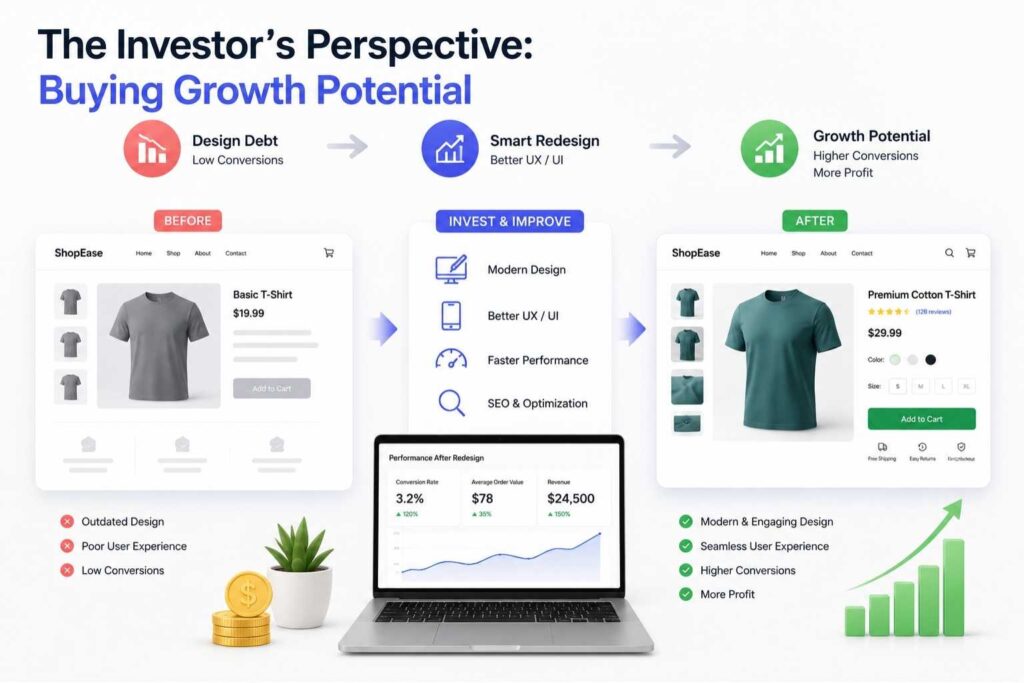
For those looking to buy ecommerce website assets, the “design debt” of a current listing can actually represent a massive “alpha” opportunity. Much like a real estate investor looks for a “fixer-upper” in a prime location, a digital investor looks for a store with great products and strong traffic but poor conversion architecture.
Identifying Optimization Gaps
When evaluating an e-commerce website for sale, savvy buyers look for “quick wins” that can instantly boost the Net Revenue:
- Mobile-First Responsiveness: Many legacy sites still treat mobile as an afterthought. Transitioning to a mobile-first design can unlock a massive, untapped segment of the market.
- CTA (Call-to-Action) Clarity: If the “Add to Cart” button is buried or blends into the background, the site is hemorrhaging money.
- Persuasive Copywriting: Moving away from generic, manufacturer-provided descriptions to benefit-driven, emotive copy improves both Search Engine Optimization (SEO) and the emotional connection with the buyer.
Boosting Average Order Value (AOV) through Architecture
A sophisticated design includes “Smart Logic” that suggests complementary products at the exact moment of peak interest. By integrating “Frequently Bought Together” or “Complete the Look” modules, the site increases the lifetime value (LTV) of every acquired customer.
Technical Foundations for Scalable Success
The backend of a product page is the skeleton that supports the skin of the design. Clean code, proper schema markup, and a logical heading structure ensure that search engines like Google can crawl, understand, and index the site effectively.
Essential On-Page SEO Checklist for Maximum Exit Value
- Structured Data (Schema Markup): This allows search engines to pull “Rich Snippets,” displaying price, stock availability, and star ratings directly on the Search Engine Results Page (SERP). This increases Click-Through Rate (CTR) before the user even lands on the site.
- Hierarchical Information Architecture: Using a strict H1-H3 tagging system for product titles, benefits, and technical specs improves readability for both humans and AI crawlers.
- Internal Link Ecosystem: Strategically linking to related categories or blog content helps distribute “link equity” across the domain and increases the average “Time on Site,” a key metric for search rankings.
The Evolution of the Digital Storefront
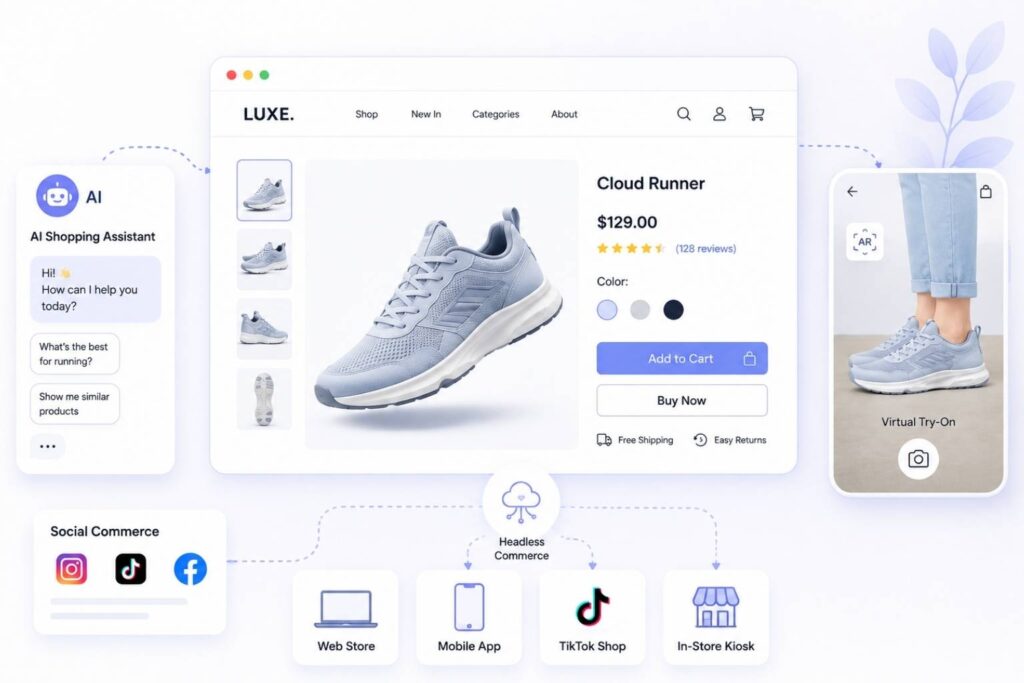
Artificial Intelligence and Augmented Reality are becoming essential parts of modern product pages. Features like virtual try-ons and AI chatbots now improve customer experience and help businesses appear more advanced and valuable in the competitive e-commerce market.
Furthermore, the concept of “Social Commerce,” where the product page is seamlessly integrated with social media feeds, is blurring the lines between discovery and purchase. A modern architecture must be flexible enough to handle “headless” commerce.
Conclusion: Designing for the Future Exit
An efficient and effective e-commerce platform requires little manual effort for the business. A paginator that converts well enhances usability, integrity, and ultimately increases the business’s value for the future.
Everything about the product includingy imagery and return policies, influences perception, as well as conversion rates. Good design is much more than aesthetics in the modern world of e-commerce; it has a significant impact on your growth, trust, and profitability.
Leave a Reply